Role
Researcher, Product Designer, Visual Designer
Collaborators
Tanishka Barne, Shubham Mestry, Shrushti Patel
Skills
Research, Visual Design, Interaction Design, Prototyping
Timeline
Jan 2025 – Mar 2025
THE CONTEXT
Why We Started
“Remote work isn’t a temporary fix — it’s the future of work.”
— Someone smart in 2020, and everyone else since.
Since 2020, remote work has shifted from a stopgap solution to a norm. But somewhere along the hyper-connected workday, human connection quietly slipped away. And with it, employee wellness began to erode.
We noticed a shift at our homes, family members grew quiet working remotely. We saw how remote employees went to gyms and cafés to engage in casual conversation — the kind that once happened naturally in offices.
So we asked ourselves:
Are remote workers really thriving… or just coping?
Preliminary Brief
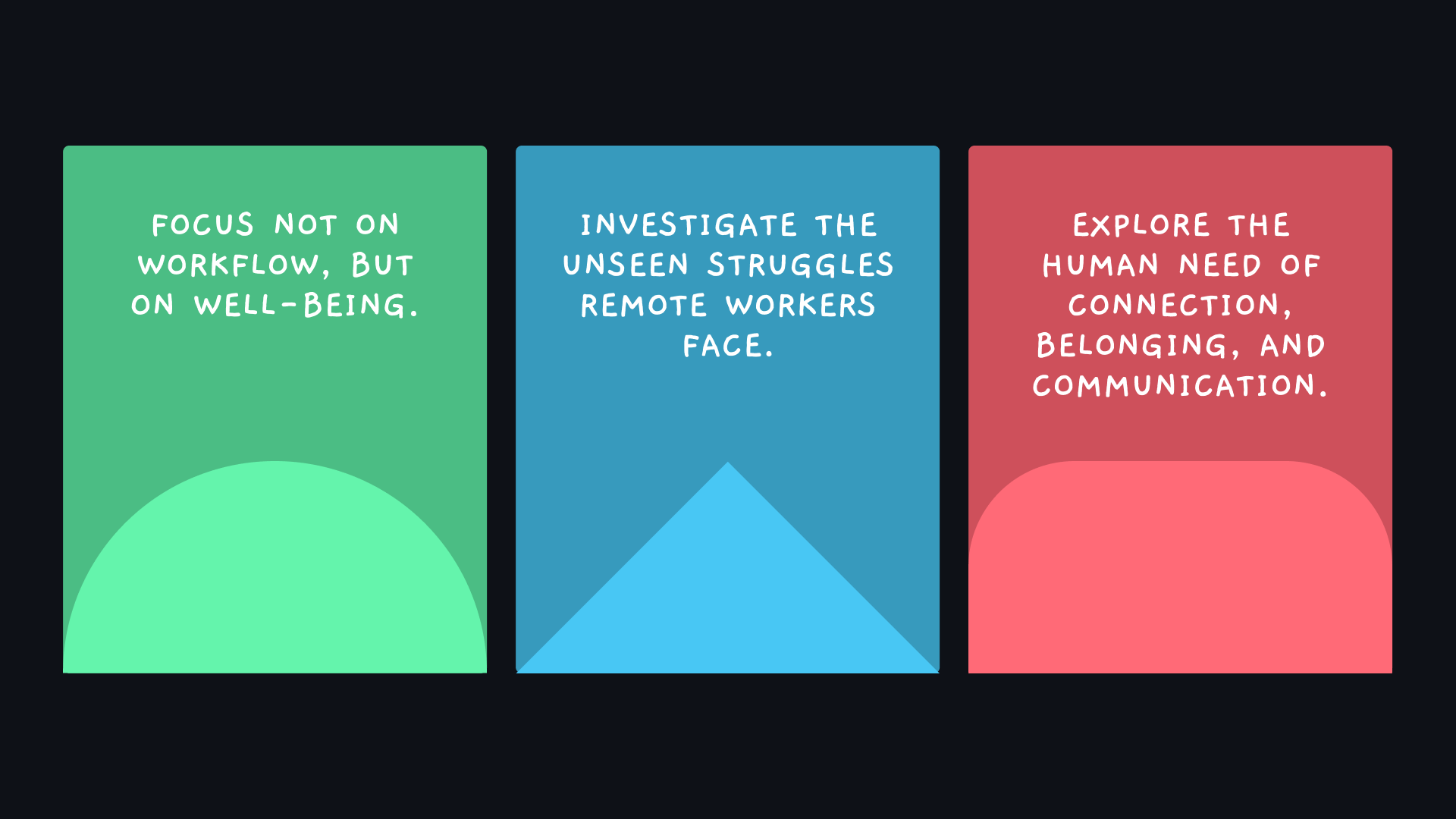
We set out to investigate the emotional and social challenges of remote work, beyond the usual metrics of productivity or task completion.
We Hypothsized
Remote workers experience increasing loneliness due to lack of casual social interaction.
Some face FOMO when hybrid or in-office teammates bond in person, leading to disengagement.
TARGET AUDIENCE
Who are we designing for?
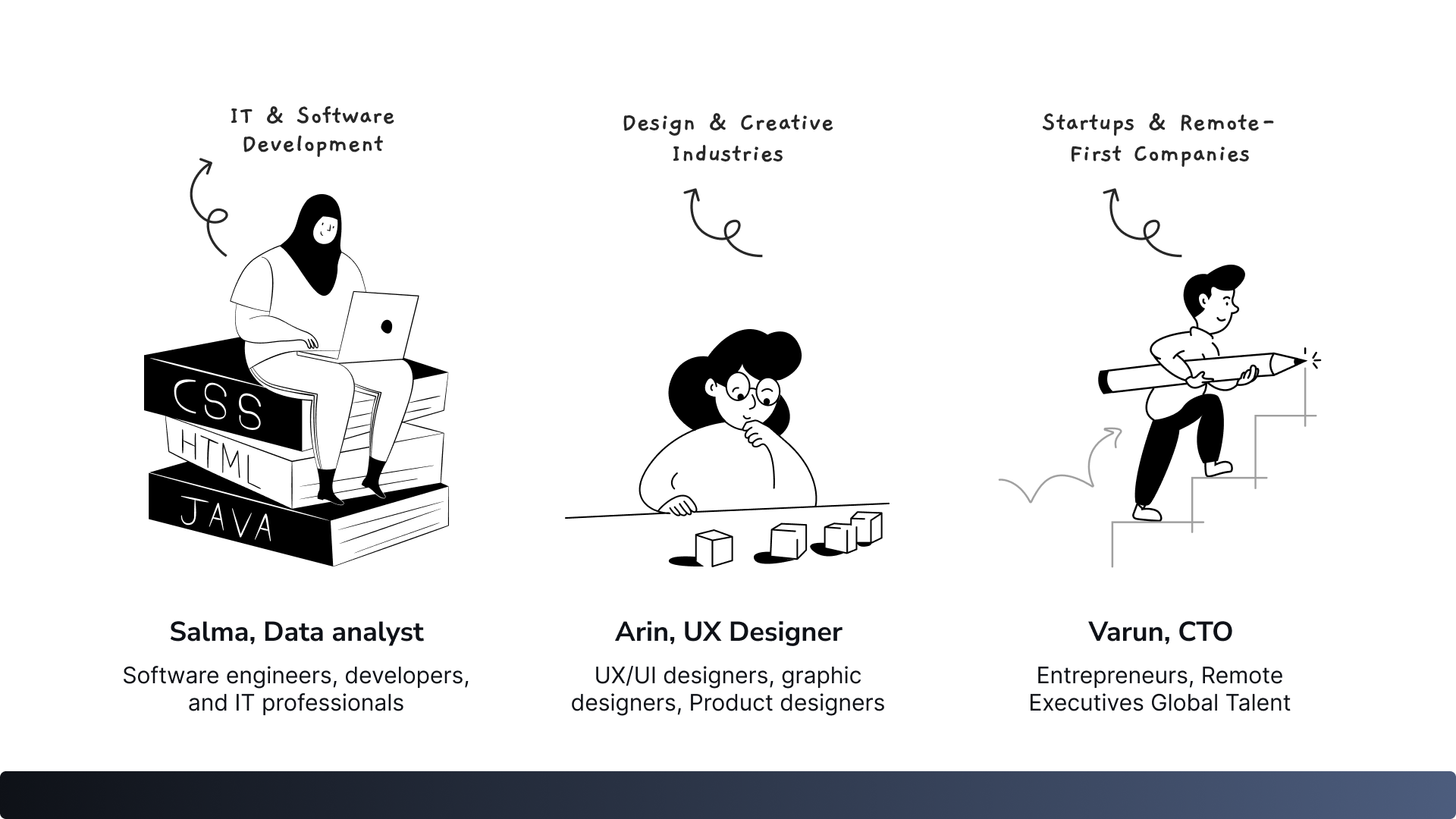
Our platform is designed for remote-first teams and professionals who seek structure, connection, and joy in their daily workflows. We are targeting the age group of 21-45 years old.
Digging Deeper
What’s Really Going On?
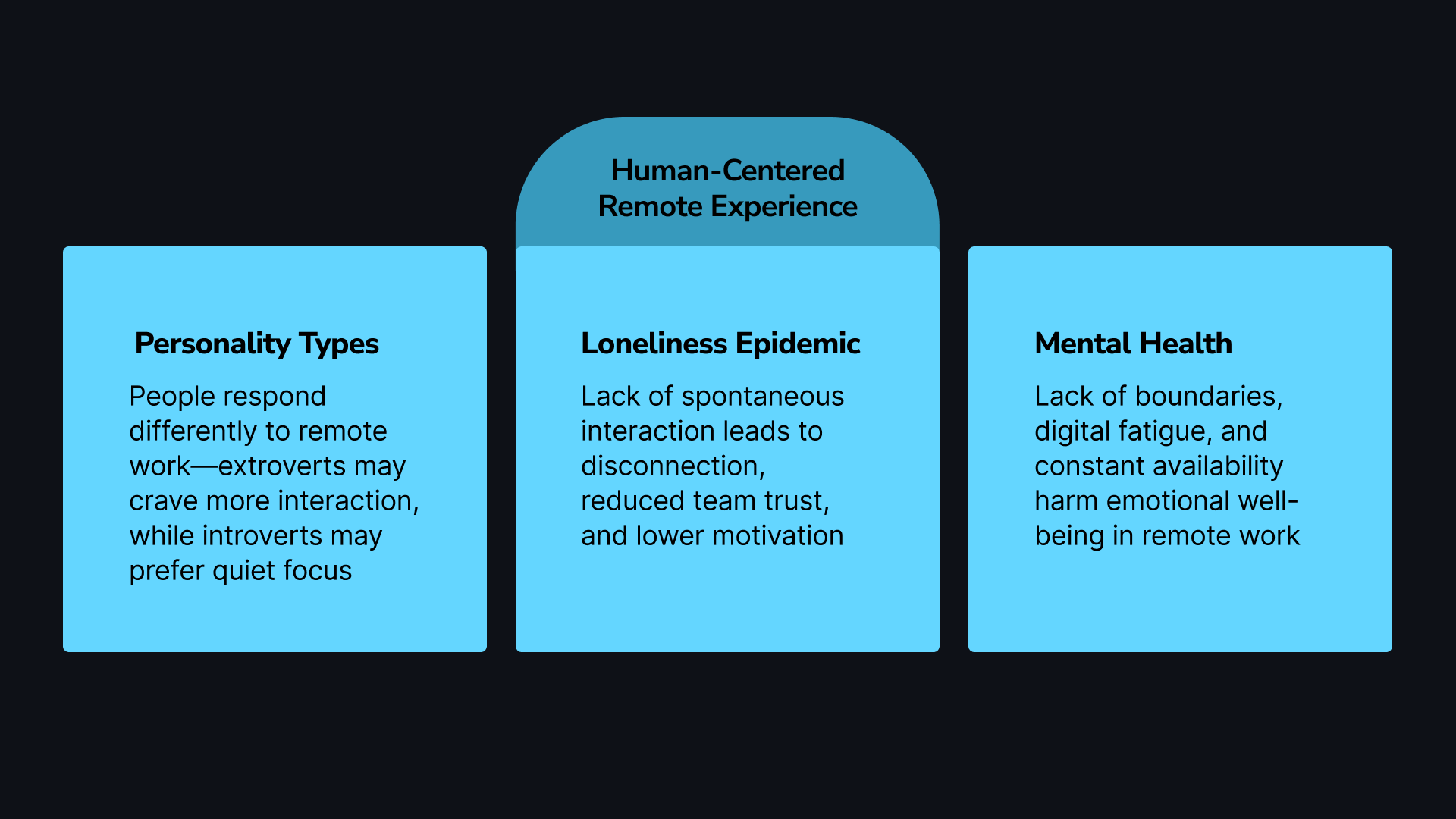
The future of work demands thoughtful, people-first remote environments that foster both productivity and connection. 1 in 5 employees feel that the loneliness of remote working has affected their mental health. Our Focus :
SURVEY
To validate our assumptions
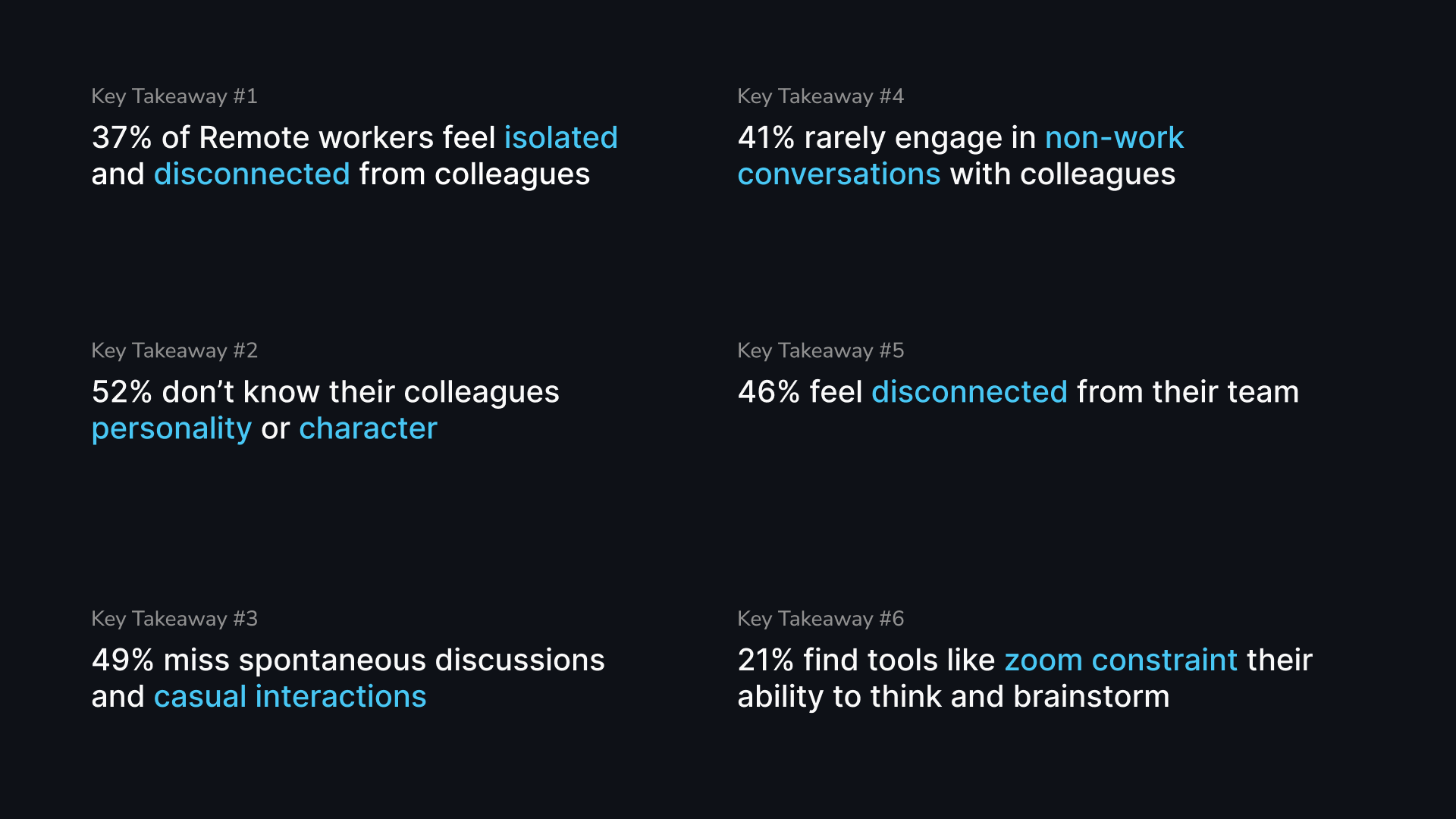
A total of 39 remote professionals shared their experiences and challenges. Their honest feedback helped us uncover patterns and refine our problem statement.
USER INTERVIEWS
Listening to People
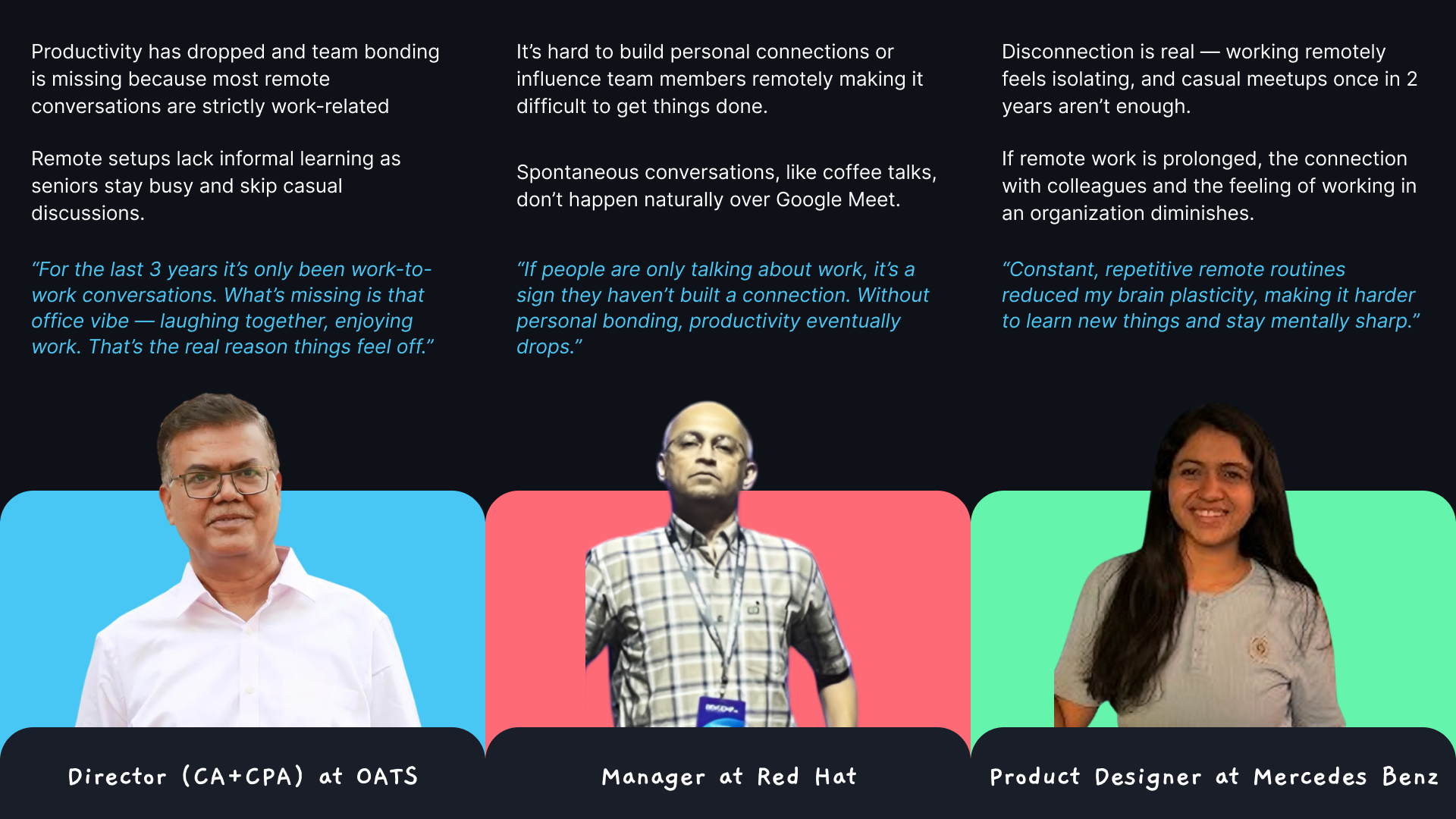
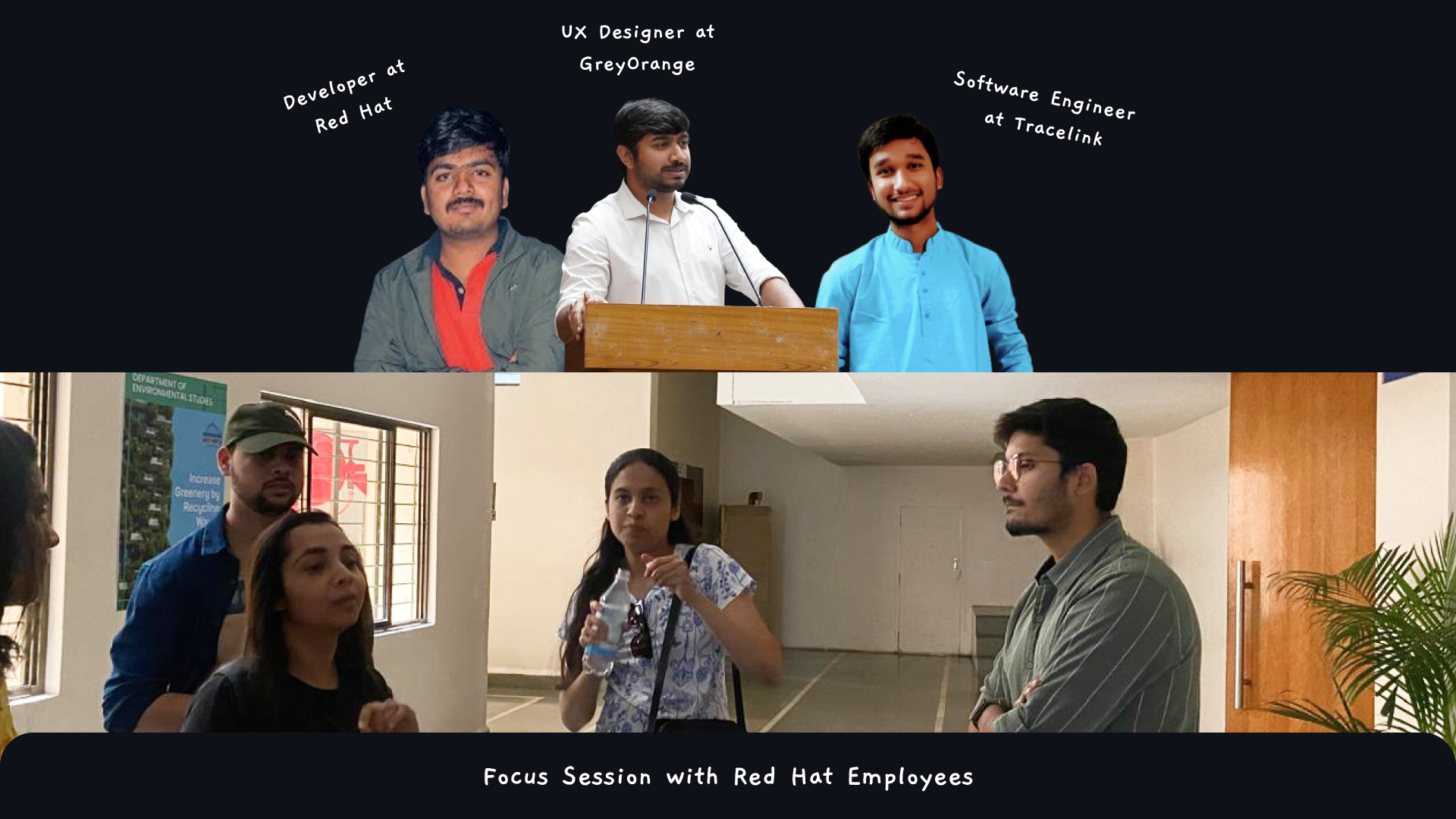
To dive deeper into real experiences, we interviewed 16 remote workers and 4 managers about their daily challenges. We also conducted a focus group with Red Hat employees. Red hat gave us a chance to connect closely with remote employees, hear their stories, and truly understand their struggles.
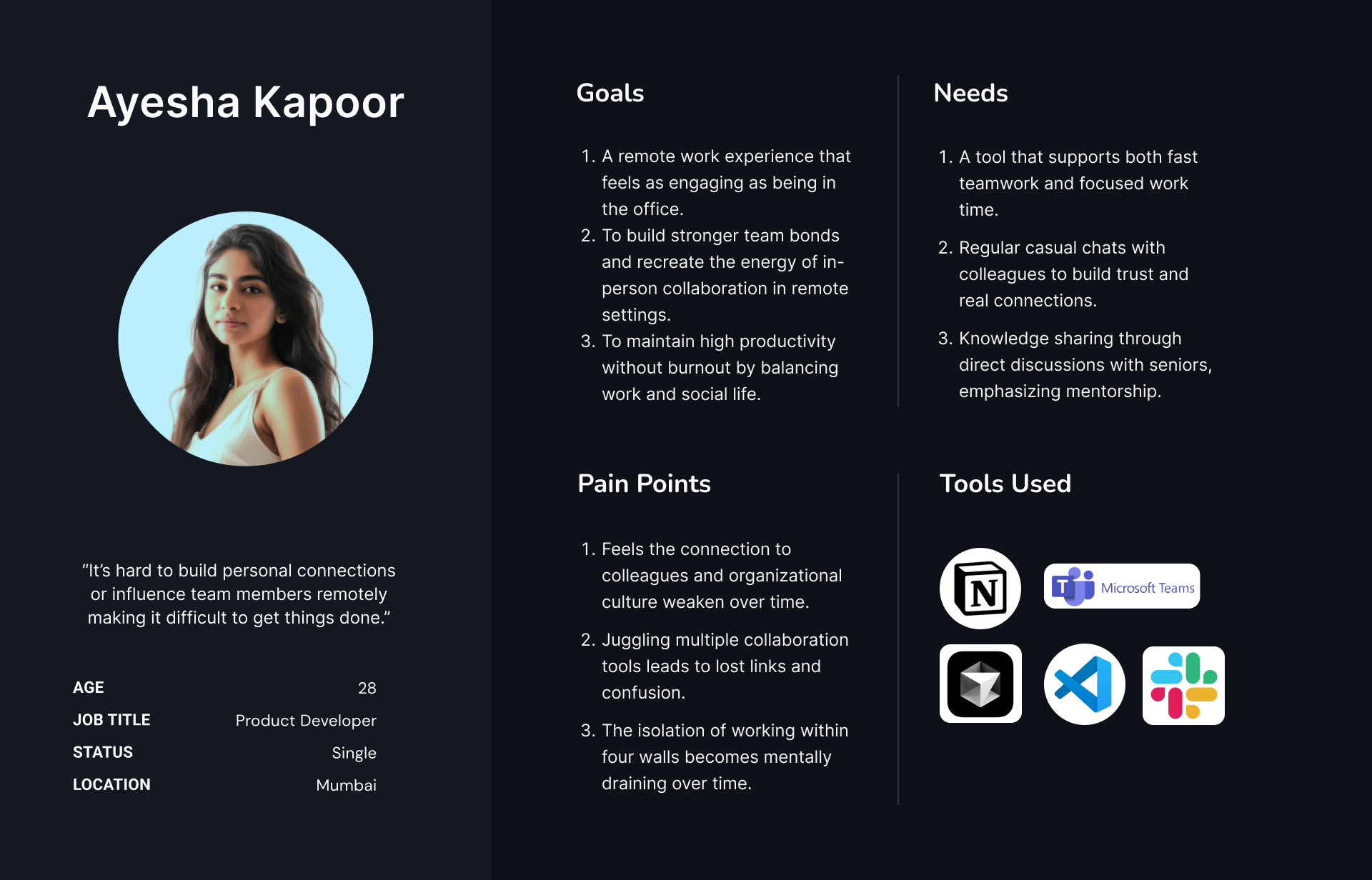
User Persona
This is Ayesha, an experienced remote worker who values both freedom and real connection. While she enjoys the flexibility of remote work, she misses the energy of office life and wants tools that bring that vibe online. She cares about mental health, and team bonding.
THE PROBLEM
The Shift We Want to Create
Our research revealed one thing clearly — in most remote setups, conversations are limited to work. Real human connection is missing, and teams feel disconnected. Hence, we don’t just want to improve work tools. We want to help remote teammates discover personalities behind the profiles, share a laugh, swap playlists, and build bonds beyond work.
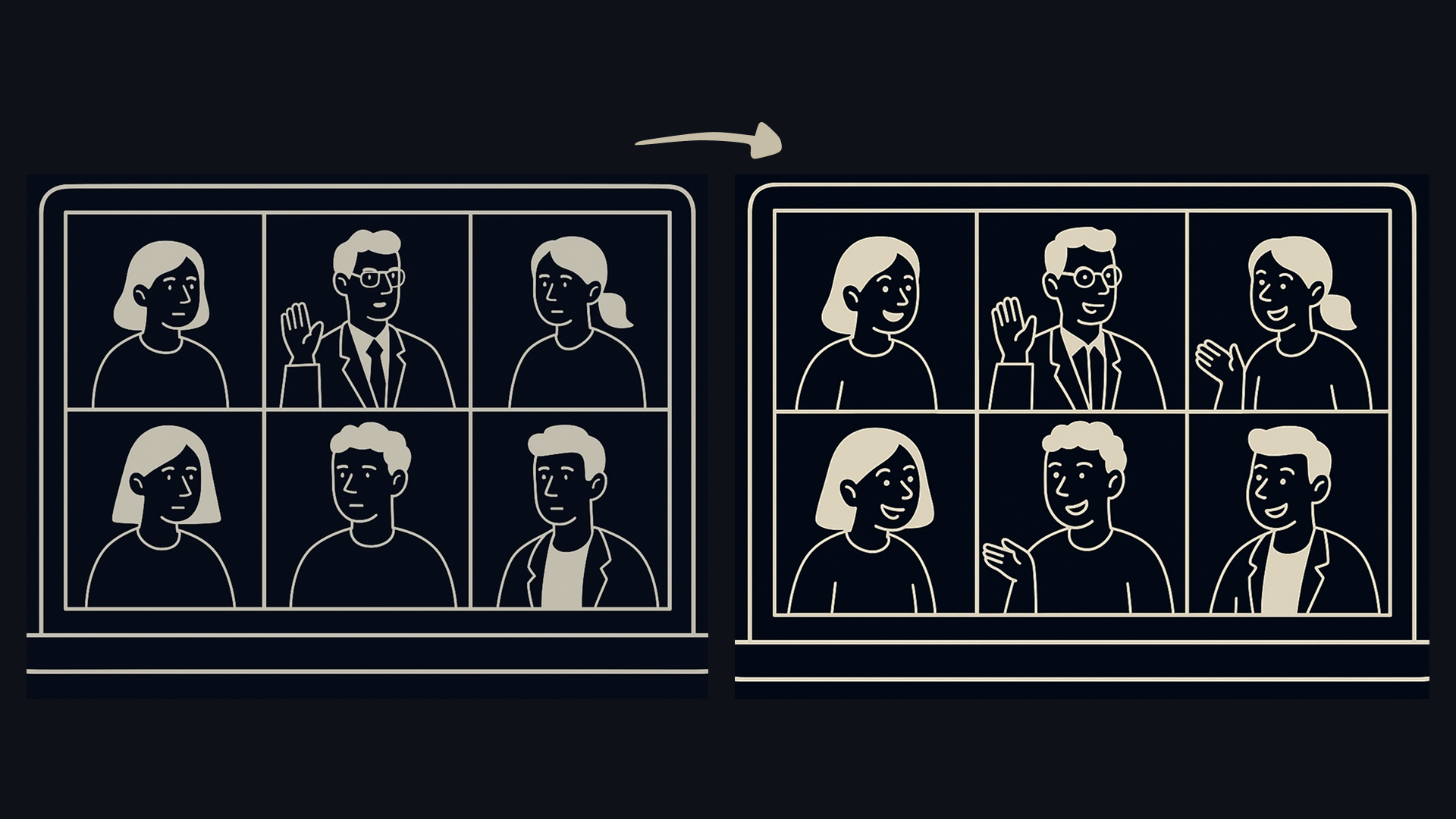
But why?
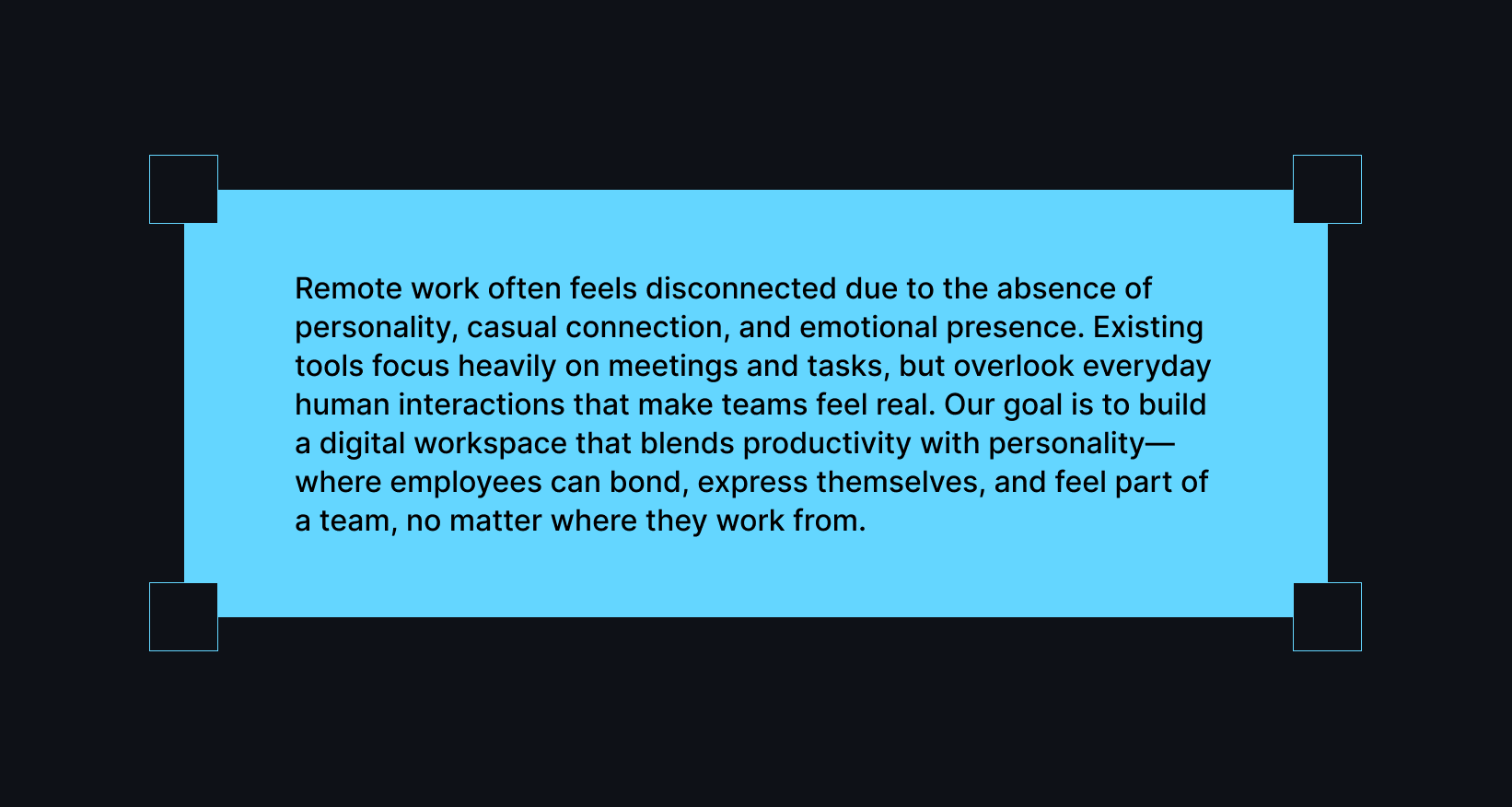
Because when you know your colleagues, work feels lighter, collaboration flows naturally, and productivity follows. That brings us down to our Problem Statement :
UNDERLYING PROBLEM
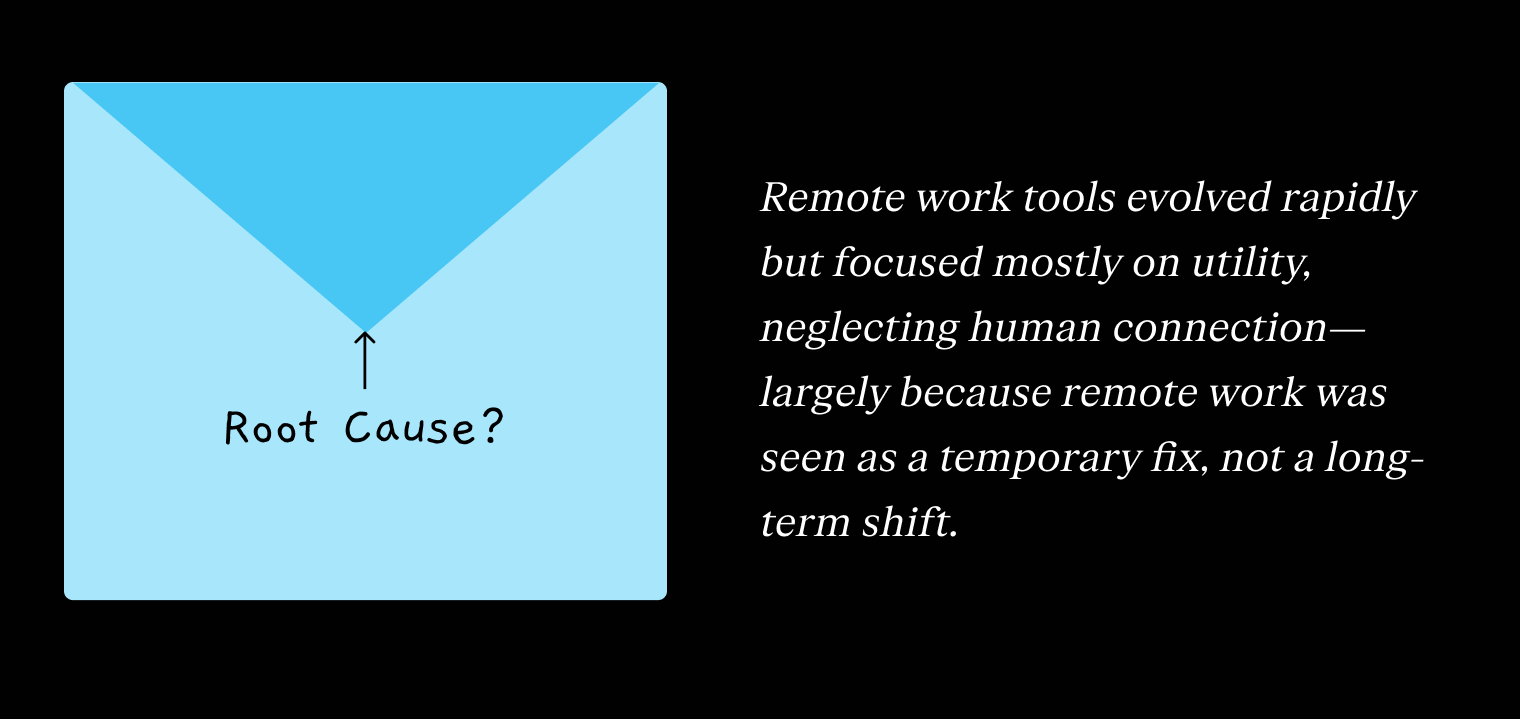
Using the 5 Why Analysis
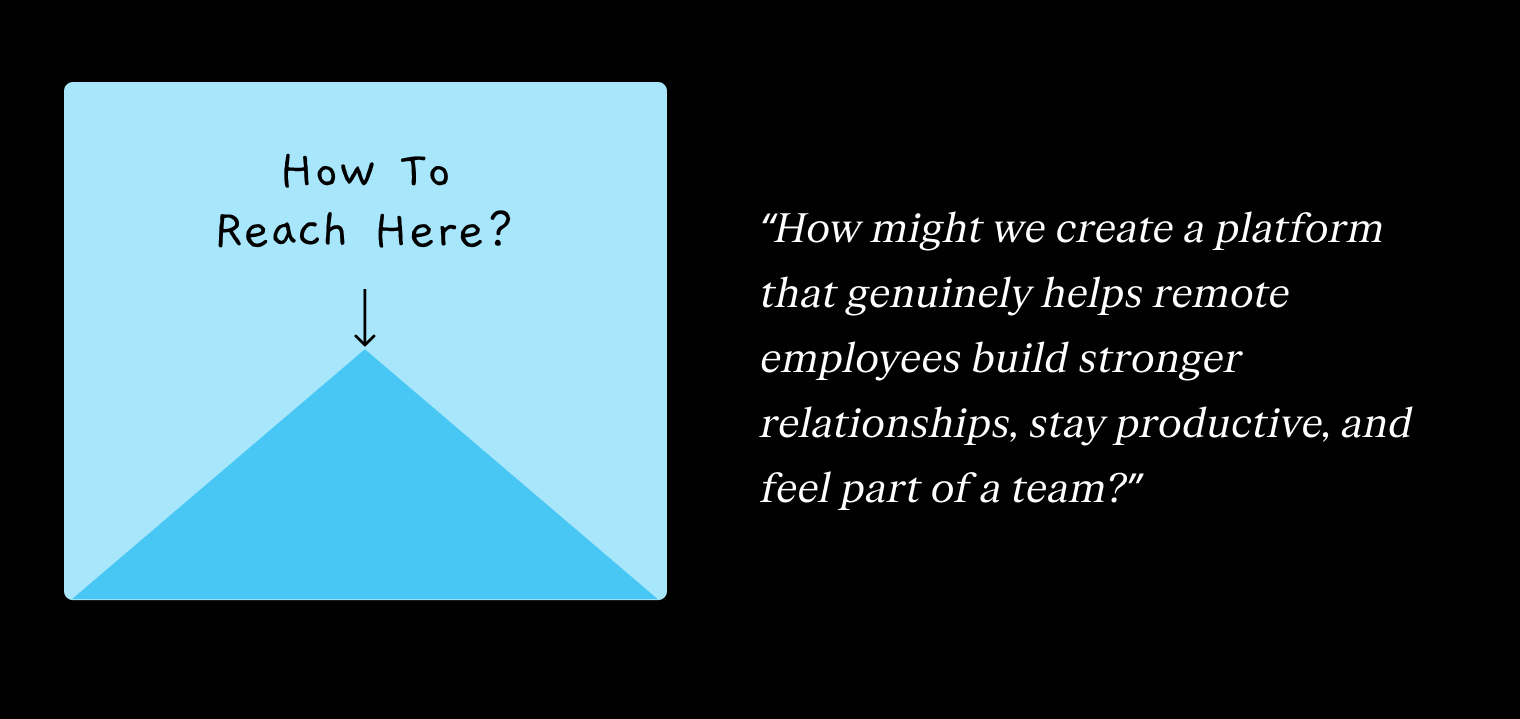
OUR ASK
COMPETITIVE ANALYSIS
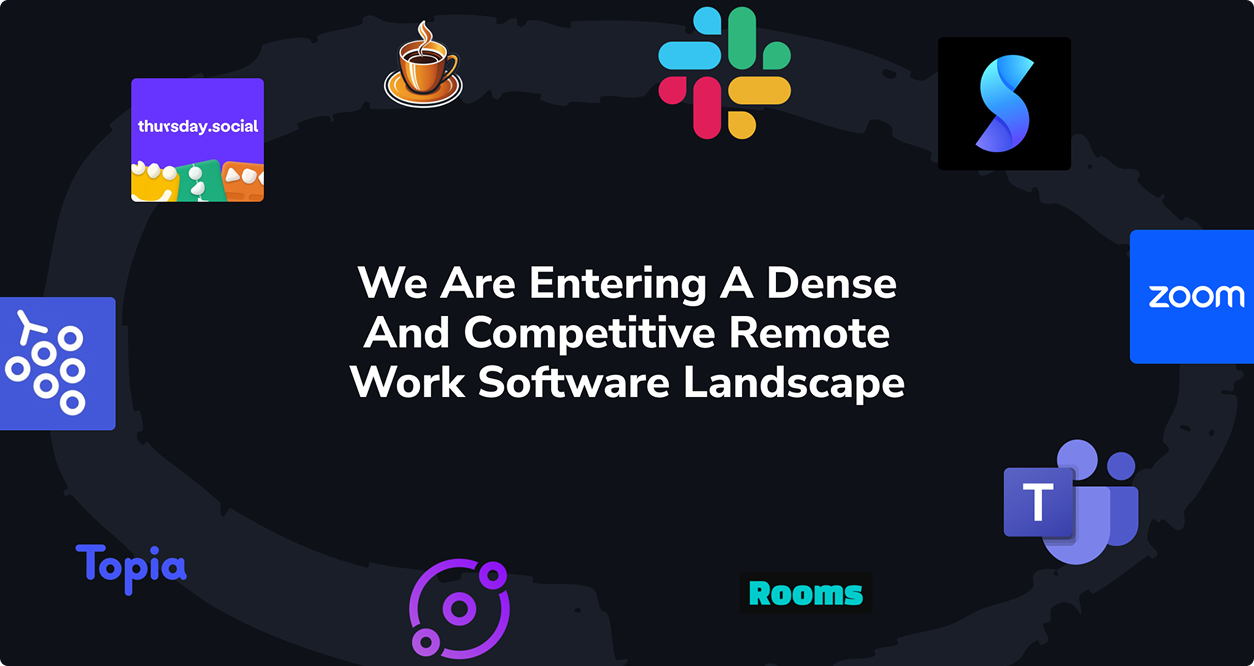
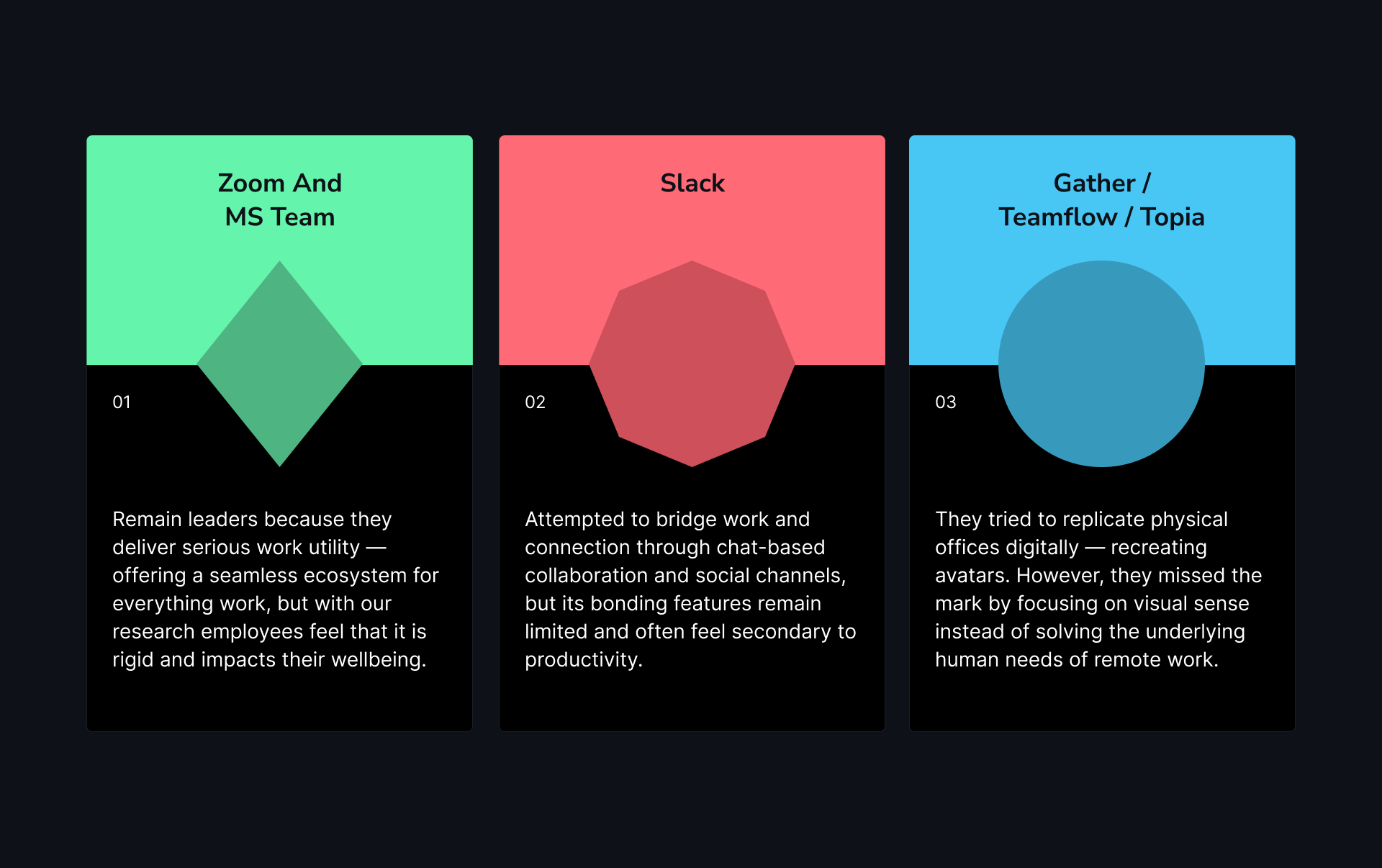
To understand the space better, we studied the existing Remote work softwares
PERPECTUAL MAPPING
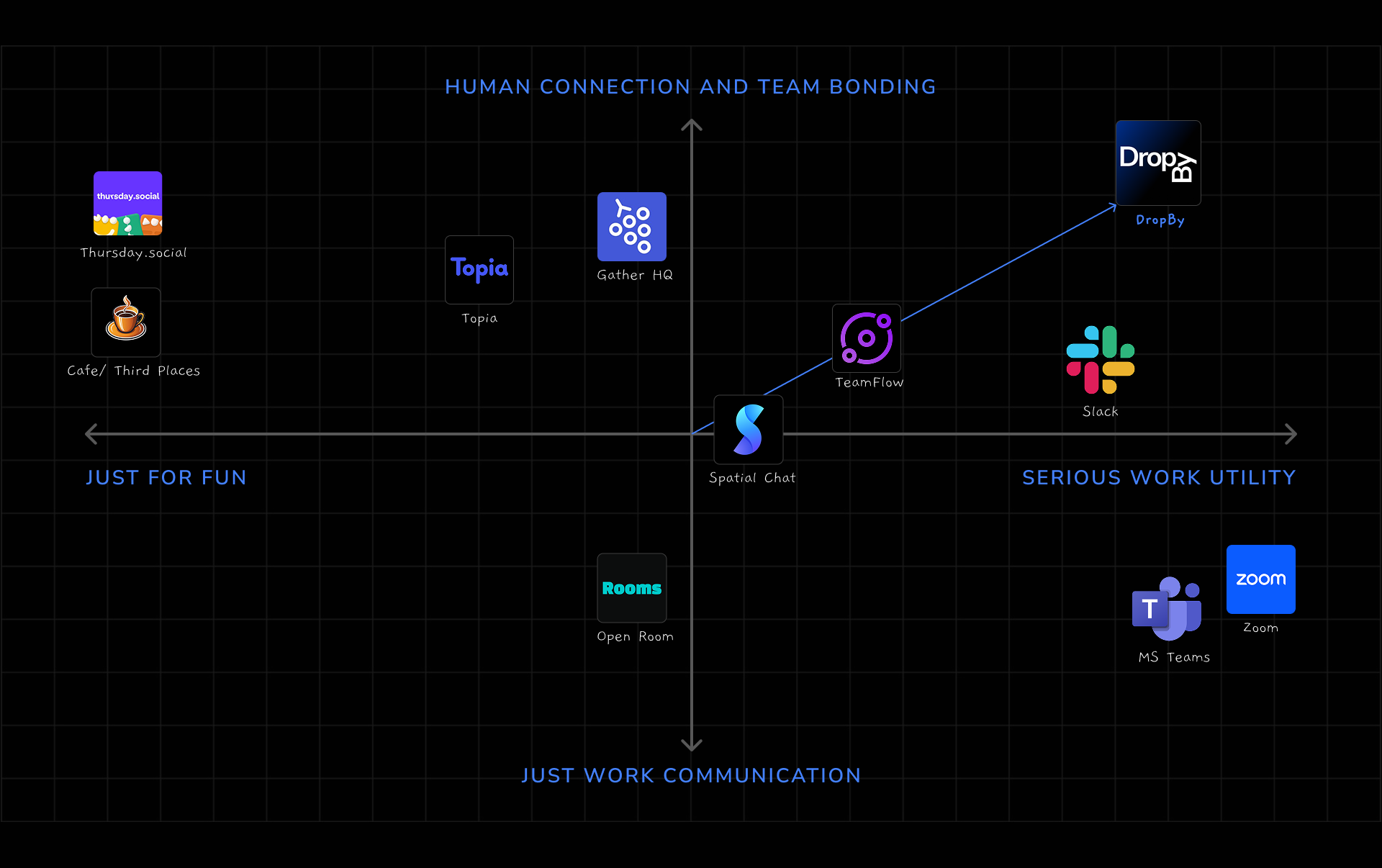
Finding our Space
We do not wish to be like Zoom or MS Teams, which only provide Serious work utility, or like Gather or Teamflow, which attempt to recreate actual offices. DropBy aims to excel in human connection and team bonding while also providing Serious work utility. Currently, no other company is doing this.
IDEATION
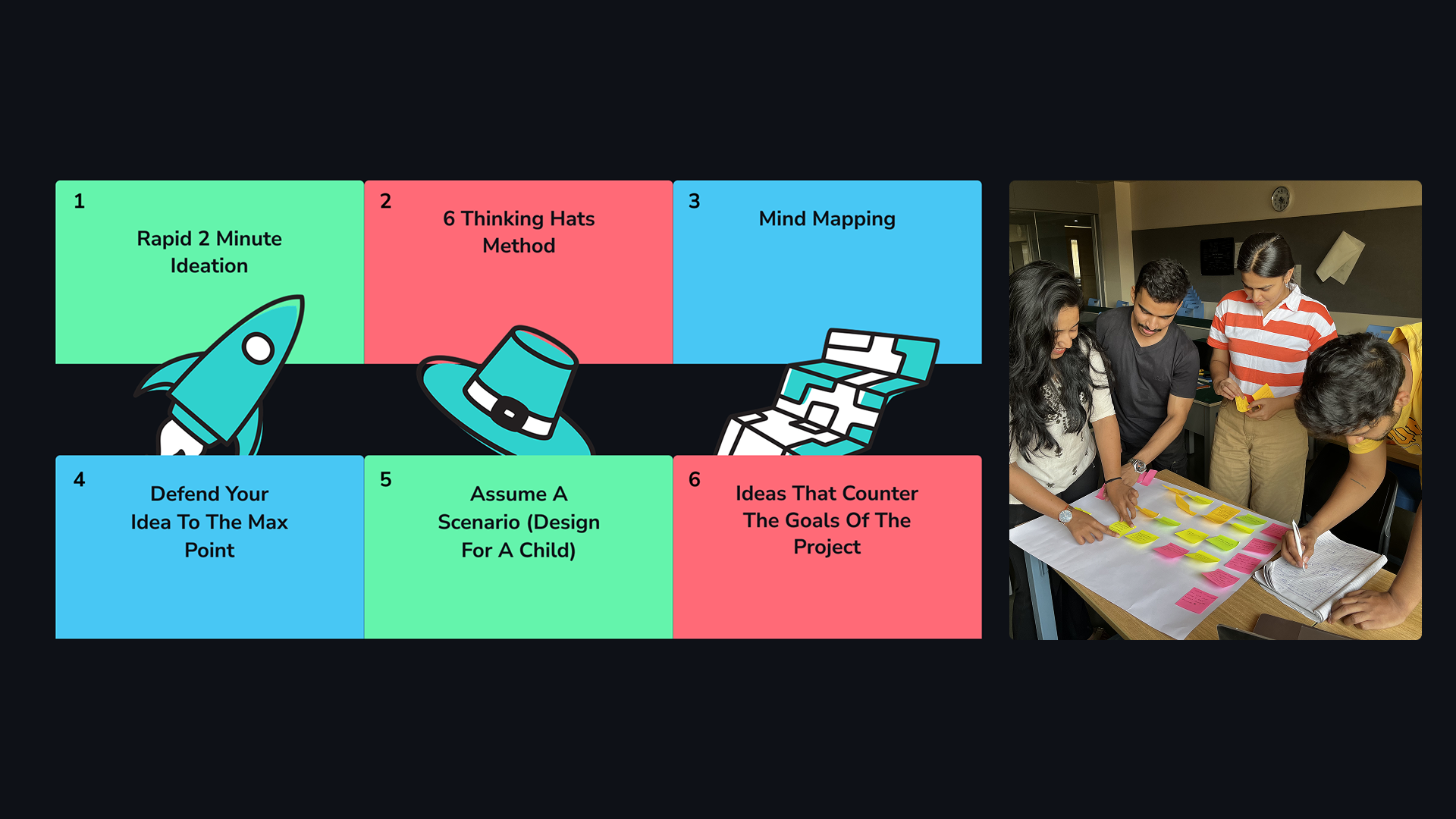
We experimented with different ways of generating ideas
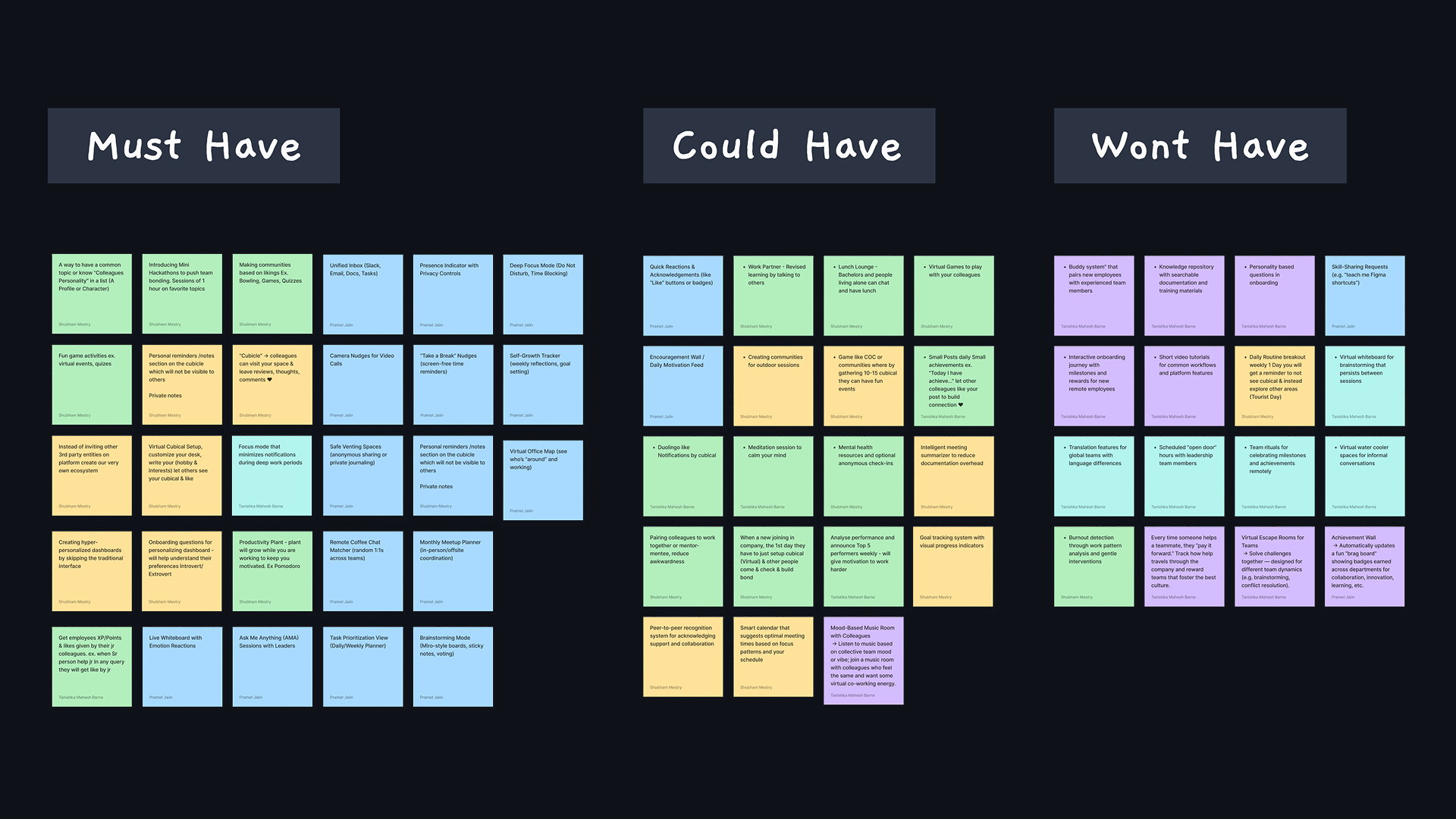
Keeping in mind our root cause, interview insights, survey and competitor research plus market positioning, we began brainstorming ideas using sticky notes. Ideas were exciting, a few clearly aligned with user needs—but they still needed validation in real-world scenarios.
FORMULATING OUR IDEA
Concept Sketch : The Desk
This is our first draft visualization of the Desk — the central feature. It’s designed as a personal space where colleagues can express their personality, interests, and work style. From pet photos to playlists, the desk itself becomes a conversation starter for colleagues
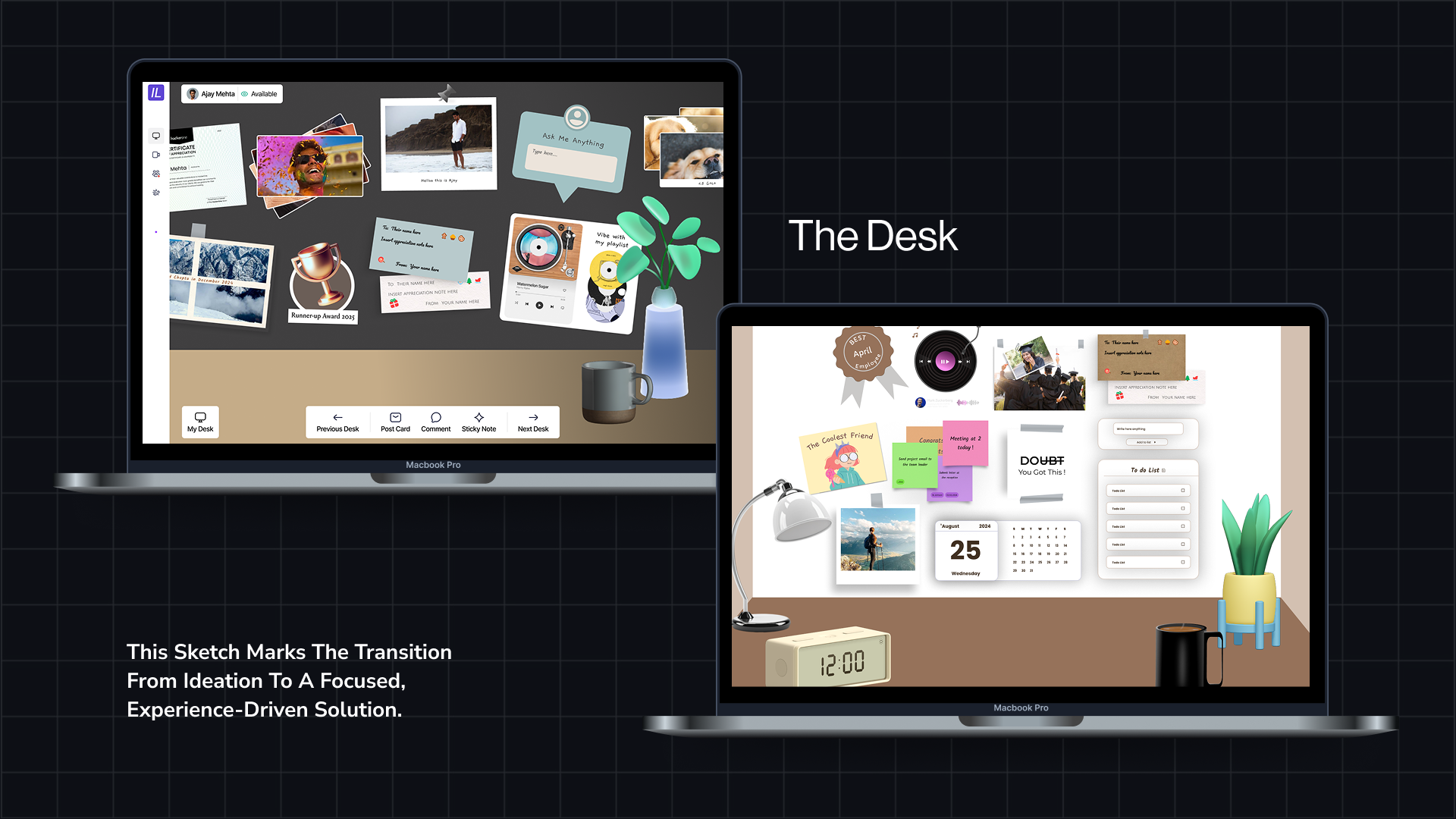
Every other feature in our platform — from productivity tools to team collaboration and communities — revolves around this central UI. The desk acts as both an ice-breaker and an anchor, helping users connect naturally without forced interaction.
OUR SOLUTION
Customize your Desk to reflect who you are
Add personal items like photos, hobbies, or achievements. This creates visibility into each employee’s interests, offering entry points for organic conversation across the organization.
Discover shared interests by visiting others’ desks
Explore how teammates have set up their workspaces. Noticing shared hobbies or details can serve as a natural way to start conversations and build informal connections.
Turn desk comments into meaningful Conversations
Comment directly on items on others desk which act like conversation starters and continue the conversation here. Join anonymous company group for internal questions, helping employees engage without pressure.
Join Communities & Interest-Based Groups
Employees can play games with colleagues. They can join internal communities such as reading clubs, gaming clubs, or jamming sessions. These places foster casual interaction, reinforcing team culture in a remote setting.
Personal Productivity View
Stay organized with a dedicated section for personal to-dos and workstreams. Designed to reduce context-switching and bring clarity to your day-to-day priorities.
Shared Team Spaces
Create shared spaces with documents, pages, files, and slates. This brings visibility and alignment to team efforts, making collaboration easier in remote or hybrid setups.
Icebreakers for Video Meetings using AI
In physical offices, bonding occurs before and after meetings. Remote meetings eliminate this buffer, moving right into agenda mode. In addition, many remote workers find it difficult to start conversations. In the Ice breaker feature, employees are given a series of questions tailored to the person with whom they want to speak. This is accomplished by combining AI with other people's personal data. It is intended to alleviate awkwardness and facilitate discussion in meetings with new faces.
OUR JOURNEY
Showing it to the Red Hat team
The Red Hat team resonated with the desk customization feature — calling it a unique, untapped space. Akshay suggested integrating it with the system wallpaper for a seamless experience, reducing the friction of opening an app. He said to add more functions to the desk so that people keep going there. He also appreciated the icebreaker prompts, especially for people who struggle to start conversations. Others liked the bonding potential of cubicle personalization, but felt some users may skip customizing it — and recommended making it a default onboarding step to drive adoption.